Showing posts with label Kurdish. Show all posts

Sunday, December 13, 2009

Who are the Kurds?


The Kurds are the largest ethnic group in the world without their own state, numbering somewhere between 25 to 35 million in population. They mostly live in a region often referred to as Kurdistan, which stretches across the borders of Iran, Iraq, Syria, and Turkey. The largest population of Kurds live within the borders of modern-day Turkey numbering an estimated 15 million people, followed by Iran, Iraq, and Syria. They are the fourth largest ethnic group in the Middle East after the Arabs, Persians and Turks.


The Kurds have been the victims of subjugation by neighboring peoples for most of their history. In the four main present-day countries in which they live, Kurds have fell victim to various discriminatory policies of oppression. They have been subject to some of the worst atrocities of mankind including ethnic cleansing and mass graves, genocide, chemical attacks and other bombings, the ban of their language and culture, displacements, the destructions of their lands, homes and properties, restrictions on social, political, and economical rights, and the burdens of poverty. The Kurds have attempted to set up their own nation-state several times throughout the 20th century but their efforts have been short of success every time.


Following World War I and the collapse of the Ottoman Empire, the Allied powers drafted the Treaty of Sèvres to solidify the partitioning of the empire and to create nation-states throughout the region. The treaty contained provisions requiring Turkey to grant sovereignty to Arab Asia and North Africa, an independent Armenia, an autonomous Kurdistan, and Greek control over the Aegean islands commanding the Dardanelles. As a result of disagreements between the Allies, as well as a strong nationalist Turkish movement that opposed several of the required provisions, the Treaty of Sèvres was annulled and eventually replaced by the Treaty of Lausanne. This new treaty excluded any mention of the Kurds’ right to self-determination among other items.
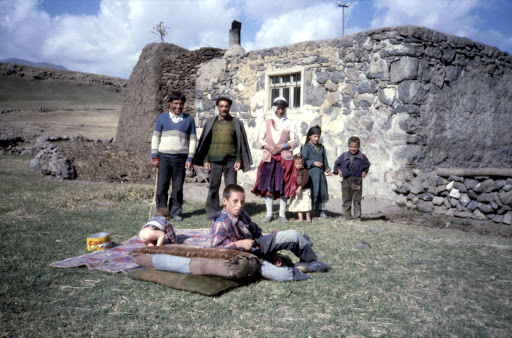
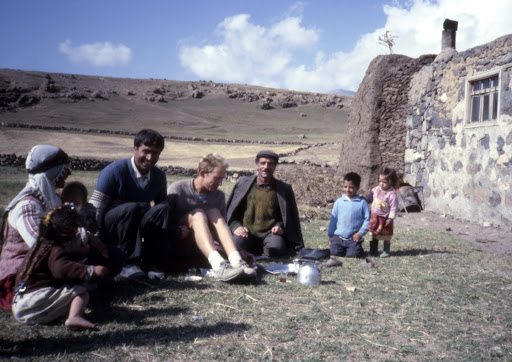
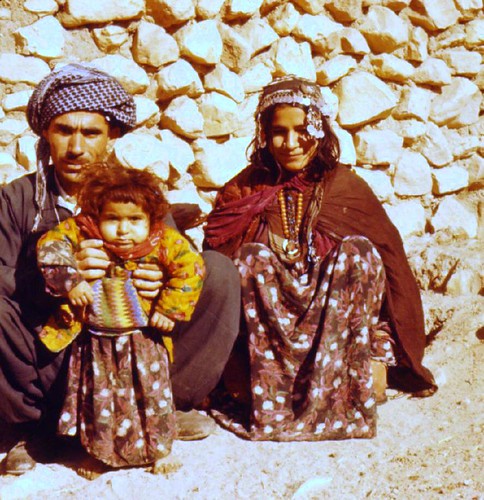


The 20th Century has been a century of a multitude of hardships for the Kurdish people living in their indigenous regions. In Turkey, Kurds have suffered cultural discrimination at the hands of the Turkish government. The Turkish government refused to recognize the Kurdish population for most of the 20th Century since the founding of the Turkish Republic, and instead referred to its citizens of Kurdish descent as “mountain Turks”. Until the late 1990s, the Kurds were unable to speak their own language publicly and there are still restrictions defined in the Turkish constitution restricting use of the language in public and political institutions. Today, while cultural rights are still mostly withheld, a seemingly unending economic problem exists in the Kurdish southeastern region of Turkey with unemployment levels reaching as high as 70%. A prime contributor to this problem may be the millions that have been displaced as a result of the ongoing conflict between Kurdish rebels and the Turkish military. In the late 20th century, as many as 4000 villages were destroyed by the Turkish military – according to the Internal Displacement Monitoring Centre – causing over 3 million to be displaced with no government compensation.


In Iran, Kurds have also suffered economic hardships. The region in which the Kurds live has been described as among the poorest and least development regions in all of Iran. Kurds in Iran successfully established a semi-independent state with Soviet backing in the mid-20th century. However, the “republic” fell within a year and its leaders executed when the Soviet Union withdrew its forces from Iran. During the decades that followed, the monarchy put several limits on the social and cultural activities of the Kurds in Iran. Following the Islamic Revolution, the newly established theocratic regime suppressed the existing Kurdish movements and executed several Kurdish leaders in the following years. In the early 21st century, Amnesty International released a report stating that Kurds were the most targeted ethnic group in Iran, noting that the majority of executions per year are carried out against the Kurds. Many Kurds who have been arrested and executed over the years have been political prisoners and human rights abuses continue to today.

In Syria, the fate of the Kurds has not been very different than that of Kurds in the other indigenous regions. The Syrian Ba’athist regime has essentially outlawed the Kurdish identity in Syria by refusing to grant at least 20 percent of the Kurdish population their citizenship. As a result, many Kurds are unable to gain access to the most basic public services enjoyed by the rest of the population in Syria. Furthermore, they do not have the option of leaving Syria because they lack any internationally-recognized documents. Human rights organizations continue to report on the ongoing abuses against the Kurdish population at large by the Syrian government.


In Iraq, Kurds suffered the tragedy of genocide at the hands of Saddam Hussein’s Ba’athist regime. At the beginning of the 1980s, it was reported that Saddam Hussein had particularly targeted Kurdish tribesmen who were opposed to his regime’s discriminatory policies against the Kurds. In one instance, 8,000 members of the Kurdish Barzani tribe were targeted and killed by the regime. Throughout the 1980s, Saddam Hussein’s regime carried out a genocidal campaign called “Anfal”, which included chemical weapons use, abductions, transfers and internal displacements, identifications and executions. According to official numbers, an approximate 180,000 Kurds were killed. The most infamous attack against the Kurds during this period was the chemical bombing of the city of Halabja in which 5,000 people (mostly women and children) were killed instantly and thousands more suffered long-term effects. Saddam Hussein’s regime destroyed at least 4,000 villages during the Anfal campaign. Mass graves continued to be unearthed in Iraq in the early 21st century decades after the campaign had been launched in the 1980s.


Today, the Kurds control three provinces in Iraq in which the majority are of Kurdish descent. In the 1990s, most of the region was protected by the no-fly-zones established by the U.S., U.K., and France following the first gulf war, and the Kurds practiced self-rule throughout this period. In 2003, Kurds allied with the international coalition and helped overthrow Saddam Hussein’s regime. Since then, Kurdish leaders and politicians have opted for a more international role, building political and economic or business ties with foreign nations. The new Iraqi constitution recognizes the Kurdistan region in Iraq as an official federal entity or state. The Kurds have established a government called the Kurdistan Regional Government (KRG) that governs the region. The issues remaining at large for Kurds in Iraq is continued protection under the Iraqi constitution as a minority, and the status of the Kirkuk and Nineveh Provinces in which a large number of Kurds reside but are currently outside control and security of the KRG. Considerable pressure remains on the Kurds in Iraq as they negotiate with Baghdad, and are forced to deal with the concurrent and delicate relations with Turkey and Iran.


Resource: http://kurdishrights.org/info-on-kurds/

Stop the censorship against Kurds in the Middle East

August 10, 2007...11:53 am

Jump to Comments

In light of all the physical anthropology I’ve barraged upon you this last week, balancing it out with some cultural issues seems fitting.

From Kamangir, I found about a new website called Kurdish Rights. The Kurds, Kurdish Costumesas you may know, are an ethic group lodged between Iran, Iraq, Turkey, and some parts of Syria. They are the world’s largest ethnic group without their own country, roughly 30 million people. The Kurds have been struggling for a long time to keep their identity, culture, and lifestyle autonomous. Far too often has this struggle resulted in mass executions, such as Saddam’s ‘Bloody Friday’ in March of 1988. For more information on the Kurds, check out this 7 minute video.

The main stream press hasn’t been giving them a fair shot, ignorantly choosing what the rest of the world considers genocide. And now with Kurdish blogs and sites being blocked by middle eastern ISPs, their voices are even further silenced.

Kurdish Rights, the website I linked above, aims,

“…to prevent Kurdish blogs and sites from being blocked by Middle Eastern ISPs. Throughout our history, Kurds were never given a powerful voice in the mainstream media, and we believe that new technology can effectively change that. However, for that to happen, we first need to allow bloggers and administrators to blog safely and without any censorship.”

Check out this video they made, the music and the message are awesome :


They’ve setup a petition that demands that Internet Service Providers (ISPs) within the Middle East unblock Kurdish blogs and websites in order to ensure the rights to freedom of speech and freedom of information for all Middle Easterners. They will this petition to the send to the Ministries of Information and ISP companies of Turkey, Iran, and Syria once they reach 10,000 signatures.

Knowing how stubborn the governments of Turkey, Iran, and Syria are, I don’t know what good the petitions will do as far as coaxing them to unblock the blogs. If these regimes really gave a rats ass about freedom of speech and information, we wouldn’t being seeing half the problems we see come out of that area of the world. Nonetheless, it is a worthy cause, and I implore you to sign — I can’t rain on the determination this organization has already shown, and I see nothing but good things come out of spreading awareness about the situation of the Kurds.

As far as anthropology goes, the plight of the Kurdish ethnic population is something that will always occupy the cannon. For as long as people try to forcibly wipe out ethnic minorities there will always be those of us that do something to resist.


Kaynak: http://anthropology.net/2007/08/10/stop-the-censorship-against-kurds-in-the-middle-east/

Kurdish Youth stand trial in Turkey for singing a song

April 9th, 2008 Goran

As the world turns, injustice continues. And as injustice continues, the Kurds continue to be without a voice…

Last year, a group by the name of The Children’s Voices of Diyarbakir that consists of Kurdish youth aged 8 to 16 years of age, many who are orphaned, received a rare opportunity to participate in a World Music Festival in California. The kids put on a wonderful performance that could – and perhaps did – even put tears of joy to the eyes of non-Kurdish attendees as much as they did for Kurdish attendees.

Voices of the Children of Diyarbakir

This Kurdish youth group is composed of mostly orphans and was put together through a program initiated by Kurds in Turkey to help get the youth off the streets by engaging them in positive activities. At the festival in California, the kids sang a wide range of traditional Kurdish folk songs, played instruments, and even danced for the audience.

Now, back in Turkey, a few of them are facing charges by Turkish prosecutors for singing these songs in California…

3 Kurdish teenagers could stand trial for singing rebel song in US

The Associated Press

ANKARA, Turkey: A lawyer says three Kurdish teenagers could stand trial for allegedly singing a Kurdish rebel song under rebel flags during a music festival in the United States in October.

Defense lawyer Baran Pamuk says the teenagers were part of a 15-member chorus that allegedly sang a song called “Enemy” during a tour of San Diego, Los Angeles and San Francisco. He says an indictment demands their prosecution on charges of spreading the separatist propaganda of the rebel Kurdistan Workers’ Party, which is fighting the Turkish state.

Pamuk said Tuesday a court will decide whether to hear the case. The three are aged between 16 and 17.

Well, the song that was actually sung by these children is entitled, “Ey Reqîb”, which is translated to “Hey Guard”. The song comes from a poem written by a late Kurdish political prisoner from Iraqi Kurdistan named Dildar (1917-1948) who wrote the poem in prison, hence the name.

Nowadays, people tend to translate the title of the song to “Hey Enemy”, as the prosecution did. The song is familiar to Kurds all over the world and has become known as the Kurdish national anthem.

Apparently singing this old piece from 1938 is considered a crime in Turkey, as are the so-called rebel flags that these kids were singing in front of. (The “rebel flags” were actually the Kurdish flag, and not exactly the flag of any particular rebel group or party.) The flag has become the official flag of the Kurdistan region in Iraq, as has the anthem.

News of these children appeared in the Turkish media first in order to rile up the Turkish public by claiming the children were spreading “separatist propaganda” like the AP article states above. Now the Turkish prosecution is working hard to put these children in prison… sadly, we all know what happens to Kurdish children in the custody of officers. (See the video of the Turkish officer breaking a 15-year-old’s arm in front of the camera here.)

By the way, in case you are wondering what happened to the 15-year-old in that video, Progressive Historians summed up a sequence of events on their site about his situation… he is in jail. For a few days, his father had been worried sick about his whereabouts until he saw the video of his son’s arm being broken on Kurdish TV. It was then his father, who can hardly afford it, set out to hire lawyers to defend his son from charges that Turkish prosecutors are planning on pressing against him. (Shouldn’t the officers torturing him be the ones on trial?)

According to the Hakkari Bar Association in Turkey, his arm was indeed broken (despite denials by the Turkish police) and lawyers who were able to visit the boy said his arm is wrapped in bandages.

There is no news as to whether he will be released.

Kaynak: http://www.mideastyouth.com/2008/04/09/kurdish-youth-stand-trial-in-turkey-for-singing-a-song/

A Year in Iraq

Negotiating Hope for the Kurdish People

Spring 2003 | Volume 26, Number 2

“Words fall short during times of war, like the wings of Icarus. All I can offer are mementos of the past, which I pass on to you like small stones on a beach. These pebbles are part of a path, but they cannot represent the entire experience. It is only the beginning of a trail, an introduction to the Kurds, so that readers can continue their own journey …”

IN 1993, AFTER BEING MARRIED for two weeks, my husband and I packed up 10 boxes of used books, flew to Istanbul, Turkey, and bought two bus tickets to Northern Iraq. We went there to teach English to Kurdish English teachers, local leaders and interested community members, and to deliver food, clothing and medical supplies to the Kurdish widows of the Iran-Iraq War and the 1991 Gulf War.


A Kurdish boy herds sheep near the village of Suleymaniya in Northern Iraq. Because of land mines planted by Iraqi soldiers, the job can be perilous. Every year, Doctors Without Borders treats Kurdish children who have lost limbs in contacts with land mines.

I will never forget my first bus ride through Eastern Turkey to the Iraqi border. Leaving the many-domed city of Istanbul — a tangled mesh of Western and Eastern customs, mosques and cathedral-like churches — the landscape panned out flat, barren. The most unexpected shock was the 10 military checkpoints established by the Turkish military to control the movement of the Kurds who live in Turkey.

At the first checkpoint, the police boarded the bus and checked everyone’s Turkish identity card and for us, our passports. At the second one, we were taken off the bus and ordered to stand in two lines — one for women, one for men. The papers were checked again; this time radio calls were made.

The third checkpoint was at a military station; two large tanks were on either side of the highway. The police came down the bus aisle and told my husband to come with them and told me to stay on the bus. I saw my husband enter the station, and I decided to get off the bus. On the way down the aisle, a Kurdish woman grabbed my hand and shook her head, a frightened “no” in any language.

Two weeks seemed like a very brief marriage interval, however, so I continued on, walking quickly past the front desk so that they would not stop me from finding my husband. Locating the right room, I sat by my husband and said: “We are teachers who are going into Iraq.” The commanding officer eventually let us return to the bus. We heard other stories of people who were less fortunate. In Turkey, Kurds often “disappear.”

There is only one road into Northern Iraq from Turkey. The Turks stamp your passport with an exit mark, and there was no entrance mark to the no-man’s land, the no-fly zone, Iraqi Kurdistan. From the border, we traveled to the Kurdish village of Shaqlawa, where we had rented part of a house from Khakha Muhammad, his two wives and four children. This village, surrounded by mountains and green, rolling hills, is a place that holds many memories for me.

Every week, Khakha Muhammad invited us over for a meal. Chima, a 10-year-old girl with straight black hair cropped under her ears and inquisitive eyes, spread a large tablecloth on the floor, lit a kerosene lamp, and brought two trays full of stuffed eggplants, peppers and grape leaves, brimming with rice and lamb. Khadija, the eldest wife, sat near me; her black dress with embroidered gold sequins covered her folded legs. When Khadija realized that she was unable to have children, she arranged for one of her most beloved cousins, Fatima, to become the second wife in the family. Khadija’s favorite child, Souza, a 5-year-old with curly ringlets and a round baby face, sat on her lap during dinner. The amiable relationship between the two women and the two young daughters was readily apparent. The two sons were more reserved in our company, like their father.

Often, we would bring a photo or an object to talk to the family members about, and we would ask them to tell stories about their lives. With the kids, we would play language games. Pointing to objects, we asked, “Tsia?” “What is it?” They would reply in Kurdish, and we repeated the word; then we would reply in English, and they repeated the word. Our first attempts at repetition always led to bursts of giggles as we learned the new sounds.

Khadija wanted to know where my gold was. When they are married, Kurdish women are traditionally given large amounts of gold jewelry, which functions like social security. If the husband dies or divorces her, the wife has enough capital to survive. During the economic sanctions that followed the first Gulf War, the Kurds sold their cars, refrigerators, televisions, carpets, clothes and furniture, and the women sold their jewelry, in order to feed their families. Khadija inquired whether I had been forced to sell all my jewelry. Under sanctions, it took an entire grocery bag full of Iraqi money to equal a $100 U.S. bill. Today, inflation has rendered Iraqi money near worthless.

Like money, hope is also in limited supply for Kurdish families such as Khakha Muhammad’s. Their people’s long history is one of repressive rule by neighboring countries, crushing poverty and a series of failed attempts at achieving their own state. The Kurds are, in fact, the largest ethnic group in the world without a homeland. Primarily Sunni Muslims, their numbers are far greater than the Palestinians, and ancient maps mark out Kurdistan as a region encompassing parts of Turkey, Iraq, Iran, Syria and Azerbaijan. Kurdish populations live in each of these countries today.

Before World War I, Kurds were part of the loosely controlled domains of either the Ottoman Sultan or the Shah of Iran; the uncertain boundary between these empires kept a measure of power in Kurdish hands. After the end of the War and the breakup of the Ottoman Empire, Kurdish nationalists pressed for an independent state or local sovereignty. The 1920 Treaty of Sevres included the formation of an independent Kurdish state, but it was never ratified.

Since then, the Kurds have lived under the rule of their neighbors. The Turks use draconian measures — such as executions, massacres, destruction or relocation of villages, torture and interrogations — to control their Kurdish population. The Kurds in Turkey have not been allowed to speak their language in schools or wear their Kurdish dress, and the democratically elected Kurdish leaders were forced out of Parliament. The violence has escalated into a civil war, which is not named and which was rarely reported in the press until just recently. Turkey opposes Kurdish sovereignty in Iraq because it might encourage the hopes of the Turkish Kurds for self-government.

The British controlled Iraq after World War I and promised a degree of Kurdish sovereignty. Kurdish leader Shaikh Mahmud Barzinji wanted complete sovereignty, however, and British troops were called in to control the area. They bombed the Kurdish city of Sulamanya, the first air bombing of a civilian area in history. The British went on to set up a monarchy of wealthy Arab landowners in Iraq and granted the country quasi-independent status in 1932. A revolutionary coup for national independence occurred in 1958.

The Arab Baath Socialist party — which would eventually be led by Saddam Hussein — took power in Iraq in 1963 and began a planned genocide of the Kurdish people. Tanks descended on Kurdish villages. Men, women and children were forced to dig a large pit, ordered to stand in front of it, and machine-gunned-down so they could be easily buried. Other villages were burned to the ground, and villagers were relocated to concentration camps. Kurds were forced out of their homes in the Kurdish village of Kirkuk, where large oil reserves lie. Kurdish leaders and fighters were executed, and their families interrogated and tortured. From 1975 to 1978, Iraq deported more than 350,000 Kurds and burned 240 villages. More recently, Iraq sent approximately 500,000 Kurdish civilians to detention camps in 1987 and used chemical weapons to kill more than 5,000 Kurds in Halabja in 1988. Over several generations, many Kurds fled into the mountains, while others waited for a brutal Iraqi regime to end.

In 1990, when Saddam Hussein invaded Kuwait, the United Nations forced him back. Economic sanctions against all of Iraq were implemented, and the United States and Britain established the no-fly zone to protect the Kurds in the North from the Iraqi president. From that point, the Iraqi Kurds lived in a no-man’s land. The food-for-oil program in Baghdad, controlled by Saddam Hussein, allowed very little aid into Northern Iraq, and only a handful of humanitarian organizations provided assistance to the Kurdish people. Doctors Without Borders offered medical assistance to the many victims of land mines — often young children who herd sheep in the hills.

During our year in Iraq, I heard many firsthand stories of people whose villages had been destroyed or whose breathing was impaired because of chemical weapons. I saw children on crutches, missing limbs. As a teacher and humanitarian aid worker, I listened to the complex historical and cultural voices around me. We lived amidst great suffering, but we joined the Kurdish people in working toward hope against all hope.

For the Kurdish people I met and came to love during my year in Iraq, persecution and betrayal has dimmed but not extinguished hope. The Kurds took advantage of the period of relative peace between the two Gulf Wars, establishing a democratic parliament six months after the first conflict ended. Today they hope that as a minority in Iraq their rights will be protected.

As I watched news of the war during the past several weeks, I mourned for those who died, and I hoped for a quick resolution. Now I wonder whether the Kurdish children have enough to eat and how the country of Iraq will be reconstructed. In a situation as complex as that of the Kurds, we must not grasp at easy answers, but rather work toward nuanced understanding and compassion. After witnessing so much suffering in Iraq, I decided to complete my Ph.D. research on how societies work toward healing and reconciliation after violence. With a research fellowship, I studied how state and artistic structures, like the Truth and Reconciliation Commission in South Africa, attempt reconciliation.

As a professor at Seattle Pacific University, I teach students about Middle Eastern literature and international fiction. When I teach poetry by Arab women, I read and explain the poems dressed in my brightly sequined black Kurdish dress, answering questions about what it was like to live in Iraq. Perhaps such exchanges will lead to more cross-cultural understanding. For me, negotiating hope for the Kurds involves increasing awareness of the Middle East in the classroom and applying the knowledge I’ve gained to consider ways of resolving difficult post-war reconstruction issues in Iraq.

Kaynak: http://www.spu.edu/depts/uc/response/spring2k3/ayeariniraq.html